What Are the Controls?
TNT Arena uses a three-key control scheme you'll learn in one round: WASD or arrow keys to move, spacebar to drop a bomb on your current tile, and R to cast your class's ultimate. There are no combos, no menus mid-match and no aiming, since an ultimate fires down the lane you're already facing. All the skill lives in where you stand and when you press. On a phone, drag on the left of the screen to move and tap the bomb button on the right (ultimates need a keyboard; more on device support on the no-download page).
What Is the Objective?
Outlive everyone else. Each match drops up to 8 players into a grid arena scattered with destructible crates and indestructible walls. Bombs explode in a cross-shaped blast along corridors, destroying crates and eliminating any player they touch, including you. Clear paths, collect the power-ups crates leave behind, cut off your opponents' escape routes, and be the last one standing when the dust settles. Themed arenas add extra rules like fog of war and ice floors; the game modes page covers each one.
What Do the Classes and Ultimates Do?
Pick a class before you queue. Everyone gets the same bomb; the class only decides what your ability on [R] does. All four are free.
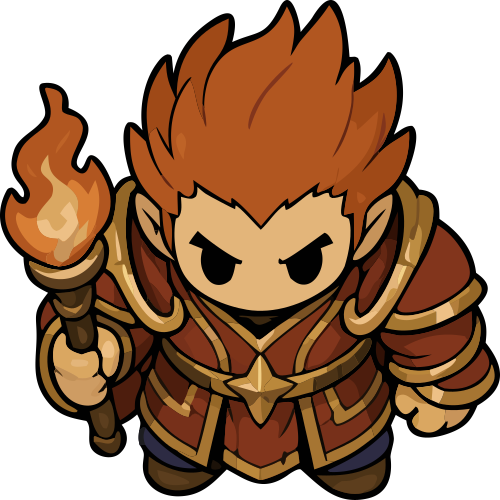 PyromancerFireball6s cooldown
Throws a fireball and burns every tile it crosses, the first crate stops it.
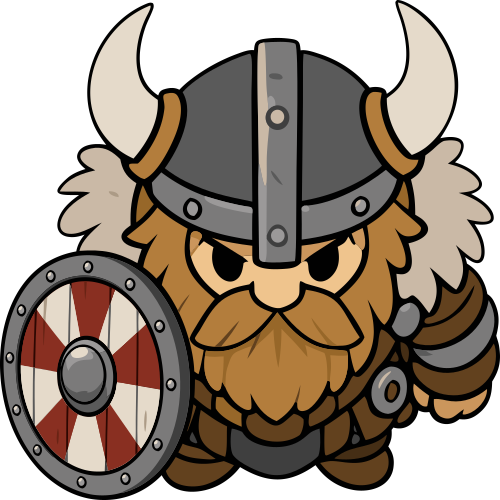 BarbarianCharge8s cooldown
Moves 4 tiles forward, killing every player and breaking every crate on the way.
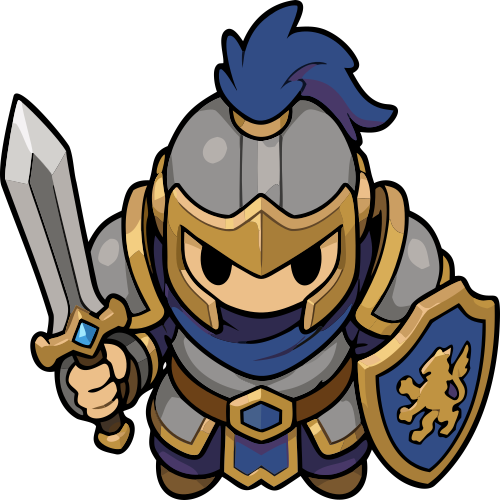 KnightShield10s cooldown
Grants immunity to explosions, and enemy ultimate abilities for 1.5 seconds.
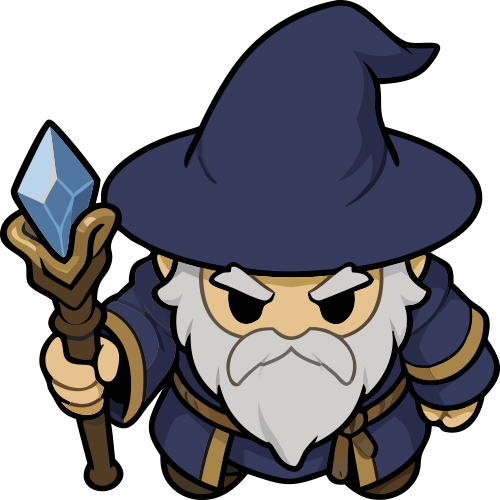 Ice MageDeep Freeze8s cooldown
Freezes every player on or next to your tile solid for 2 seconds. Kills nobody.
Three of the four telegraph before they land: the tiles they are about to hit light up and the caster stands still until they do. Red means the tile will kill you; the Ice Mage's cyan means it will only freeze you. That cuts both ways. Step one tile sideways out of a lit lane and the ability misses; cast one, and you have committed to it in front of everyone who can see it. The Knight's Shield is the exception, since it hits nobody and shows nothing.
Cooldowns are timers, not meters you fill, and the Short Fuse power-up shortens them as well as your bomb fuse: 5% per pickup, so a full stack of five takes 25% off. A loaded Pyromancer gets a Fireball roughly every four and a half seconds instead of six.
What Does Each Power-Up Do?
Power-ups drop from destroyed crates. Walk over one to collect it. Effects stack for the rest of the round, and half of your stack spills back onto the map when you die.

Move faster across the map. Speed is the most underrated pickup in the game: it wins escapes, wins races to power-ups, and lets you take risks slower players can't.

Raises how many bombs you can have on the ground at once. More bombs means you can wall off corridors and cut escape routes instead of placing one bomb and hoping.

Extends your blast radius by one tile per pickup. Long-range bombs control whole corridors, but remember your own blast gets bigger too.

Shortens two clocks: your bombs' fuse and your ultimate's cooldown, by 5% per pickup. Deadly for surprise traps, but it demands precise timing, because your own escape window shrinks with it too.
What Are the Best Beginner Tips?
Before you place a bomb, know exactly which tile you'll be standing on when it pops. If the answer is 'somewhere in the blast', don't place it.
The first minute is an economy race. Players who open more crates enter the mid-game with more bombs, range, and speed, and win most direct fights.
A bomb is a wall that's about to explode. Drop one behind you while retreating, or seal a corridor to force an opponent toward a dead end.
All bombs tick on a predictable timer. Count it in your head and you'll walk through 'dangerous' zones the moment they're actually safe.
In an 8-player arena, aggression early is a coin flip. Play the edges, collect power-ups, and let rivals trade kills, then clean up the survivor.
What Mistakes Should You Avoid?
New players retreat into dead ends under pressure. Always retreat toward open space, because a corner plus one enemy bomb is a guaranteed loss.
Blasts travel in a cross along corridors. Stepping one tile sideways out of the bomb's row or column is the difference between alive and eliminated.
That last power-up before the fight starts is how most players die. If grabbing a pickup means walking into a live blast zone, it was never free.
Frequently Asked Questions
What are the controls in TNT Arena?
On desktop, move with WASD or the arrow keys, drop bombs with the spacebar, and cast your class's ultimate with R. On a phone or tablet, drag on the left of the screen to move and tap the bomb button on the right. Touch controls cover moving and bombing, so ultimates need a keyboard.
What is the objective of the game?
Be the last player standing. Up to 8 players share a grid arena; destroy crates to open paths and collect power-ups, and eliminate opponents by catching them in bomb blasts.
How do power-ups work?
Power-ups hide inside destructible crates. Blow up a crate and walk over the pickup to collect it: Speed makes you faster, Extra Bomb raises your bomb count, Explosion Range extends your blast, and Short Fuse makes your bombs detonate sooner while also cutting 5% off your ultimate's cooldown. Dying spills half of what you were carrying onto the tiles around your body, so a loaded player is worth killing, and worth reaching first.
What are classes and ultimates?
Every player gets the same bomb, so a class only decides one thing: what your ultimate does when you press R. TNT Arena has four, all free. The Pyromancer's Fireball is thrown down the lane you're facing and burns outward until a wall stops it or it smashes a crate. The Barbarian's Charge carries him four tiles forward, killing every player and smashing every crate on the way. The Knight's Shield makes him immune to bombs and ultimates for 1.5 seconds, so he can walk straight through a blast. The Ice Mage's Deep Freeze reaches only one tile and kills nobody, it freezes everyone on or beside him solid for 2 seconds, and a Shield is no answer to it, because being frozen is not being burned. Your class is your character, so picking who you look like is picking what R does.
How do ultimate cooldowns work?
An ultimate is on a timer, not a meter you fill. The Fireball comes back after 6 seconds, the Charge after 8, and the Shield after 10. The HUD badge next to R always shows a duration: how long the cooldown is while the ability is up, and how much of it is left while it isn't. Each Short Fuse power-up you're carrying takes 5% off that timer, so a full stack of five is 25% off: a 10-second Shield returns in 7.6.
Can I dodge an ultimate?
Usually, yes. The Fireball and the Charge both paint the tiles they're about to hit in red, and the tiles shown are the tiles hit, so stepping one tile out of the lane makes it miss. The Fireball reveals its path a tile at a time as the ball flies, and the tile it lands on first is warned the longest, so even a Pyromancer throwing at point blank range gives you time to step off it. The Knight's Shield is the one you can't answer: it kills nobody, so there's nothing to step out of.
How long does a match last?
A typical round takes 2 to 5 minutes depending on player count and how aggressive the lobby is. Rematches are one click, so sessions can be as long or short as you like.
Can I play TNT Arena on mobile?
Yes. Phones and tablets get touch controls in both portrait and landscape: a thumb-stick on the left, a bomb button on the right. Landscape fits a larger board, so it's the better way to play.
Ready for a Real Match?
The fastest way to learn is to play. Matches take five minutes and losing is half the education. Set up a private room with friends, or dive deeper with the advanced trapping strategy guide once the basics feel comfortable.